Blog

  • Detox Smoothies: Real Benefits and How to Make One Balanced

    Why Detox Smoothies Matter (and what they realistically do)

    1) Supports natural detox pathways (liver + kidneys)

    Your liver and kidneys filter and process waste products every day. A smoothie that includes water-rich fruits and vegetables, plus adequate fluids (water, coconut water, herbal tea), helps maintain hydration—one of the most important factors for kidney function and healthy elimination.

    2) Boosts fiber for digestion and regularity

    Most people don’t get enough fiber. Detox smoothies—especially those made with spinach/kale, chia/flax, berries, and even a small portion of oats—can help:

    • Support a healthy gut microbiome

    • Improve bowel regularity

    • Reduce bloating for some people (particularly when replacing ultra-processed snacks)

    3) Increases micronutrients and antioxidants

    Leafy greens and colorful fruits provide vitamins and plant compounds (like vitamin C, carotenoids, and polyphenols). These support overall health by helping the body handle everyday oxidative stress and inflammation.

    4) Helps balance energy levels (when properly built)

    A “detox” smoothie that’s only fruit can spike hunger soon after. A balanced smoothie that includes protein (Greek yogurt, protein powder, or tofu) and healthy fats (avocado, nut butter, chia/flax) can:

    • Keep you full longer

    • Stabilize energy and cravings

    • Make it easier to maintain healthier eating patterns

    5) A convenient way to add greens (without overthinking)

    Many people struggle to eat enough vegetables. Smoothies make it simple: one glass can include 1–2 cups of greens plus fruit for taste—an easy daily habit.

    6) Supports hydration (a major “detox” factor people overlook)

    Fatigue, headaches, and constipation are often linked to low fluid intake. Smoothies naturally increase daily fluids and can be a good alternative for people who don’t drink much water.

    A detox smoothie is best viewed as a nourishing reset: a simple, delicious way to increase hydration, fiber, and nutrient-dense foods—supporting digestion and everyday wellness without extreme rules.
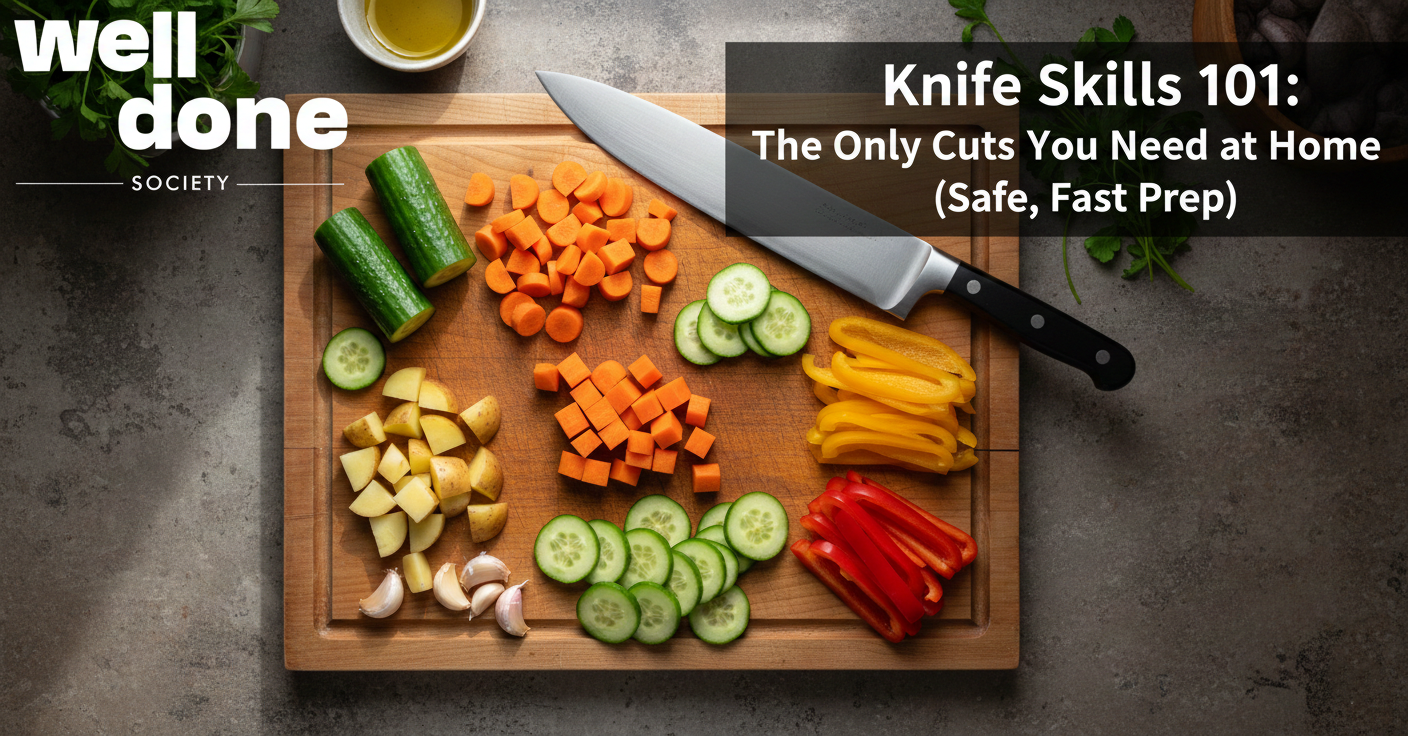
  • Knife Skills 101: The Only Cuts You Need at Home (Safe, Fast Prep)

    What You Need

    1) One good knife

    • Chef’s knife (20 cm / 8 inch) is the most versatile.

    • If you prefer smaller: a Santoku is a great alternative.

    2) A stable cutting board

    • Wood or quality plastic is ideal.

    • Put a damp paper towel or kitchen cloth under the board so it doesn’t slide.

    3) A safe grip (this matters more than speed)

    • Pinch grip: pinch the blade near the handle with your thumb and index finger; wrap the other fingers around the handle.

    • Claw hand: curl fingertips of your non-knife hand inward and use your knuckles as a guide.

    The 5 Cuts Every Home Cook Should Know

    1) Slice (for cucumbers, tomatoes, citrus, onions)

    What it’s for: quick salads, sandwiches, garnishHow to do it:

    1. Create a flat surface (cut one side so it doesn’t roll).

    2. Use a smooth forward motion—don’t press straight down.

    3. Keep thickness consistent.

    Pro tip: For tomatoes, use a sharper knife and light pressure. If it squashes, it’s usually the knife—not you.

    2) Rough Chop (for herbs, greens, quick stir-fries)

    What it’s for: speed when perfect shape doesn’t matterHow to do it:

    1. Gather ingredients into a pile.

    2. Rock the knife tip on the board while lifting and lowering the handle.

    3. Turn the pile and repeat until the size is right.

    Pro tip: Don’t over-chop herbs or they can turn watery and dark.

    3) Dice (small, medium, large — for onions, peppers, potatoes)

    What it’s for: even cooking and cleaner presentationHow to do it (simple home method):

    1. Slice the ingredient into even planks.

    2. Stack planks and slice into sticks.

    3. Turn and slice across the sticks to make cubes.

    Sizes (easy reference):

    • Small dice: ~5 mm (fast-cooking sauces, salsas)

    • Medium dice: ~1 cm (stews, sauté)

    • Large dice: ~2 cm (roasting)

    4) Mince (for garlic, ginger, chili)

    What it’s for: flavor that spreads evenlyHow to do it:

    1. Smash garlic with the flat of the knife to remove the peel.

    2. Slice, then chop.

    3. Hold the knife tip down and rock to mince finer.

    Pro tip: Add a tiny pinch of salt to garlic while mincing—helps it break down faster.

    5) Julienne (matchsticks) → the “fancy” cut that’s actually useful

    What it’s for: salads, slaws, quick stir-fries (carrot, cucumber, bell pepper)How to do it:

    1. Square off the ingredient (create flat sides).

    2. Cut into thin planks.

    3. Stack planks and slice into thin matchsticks.

    Pro tip: If perfect matchsticks feel hard, aim for “thin sticks.” Consistency matters more than perfection.

    Practice Routine (10 Minutes, No Stress)

    Pick one ingredient and do one cut:

    • Cucumber: slice → dice

    • Carrot: julienne → small dice

    • Onion: medium dice

    • Garlic: mince

    Do this once a week for a month and your hands will learn faster than you think.

    Common Mistakes (and Quick Fixes)

    • Board slipping: damp towel under board.

    • Food rolling: cut a flat side first.

    • Uneven sizes: slow down and stack planks before dicing.

    • Knife feels “hard to use”: it’s often dull. A sharp knife is safer than a blunt one.

    • Fingertips at risk: keep the claw hand tight; let knuckles guide the blade.

    Knife Care Basics (So Cutting Gets Easier)

    • Wash and dry right after use.

    • Avoid cutting on glass/stone boards.

    • If you can, sharpen occasionally (or use a service). A honing rod helps alignment but isn’t the same as sharpening.

    Quick FAQ

    Do I need a full knife set?No. One chef’s knife + a small paring knife covers most home cooking.Should I “rock chop” everything?Not everything. Rocking is great for herbs; for many vegetables, a smooth slice-and-forward motion is cleaner and safer.

    Want to Learn This in a Workshop?

    At Welldone Society, a Knife Skills session can cover:

    • Safe grip and speed-building

    • Onion dice without tears

    • Herbs and garlic techniques

    • Prep like a pro for salads and meal prep